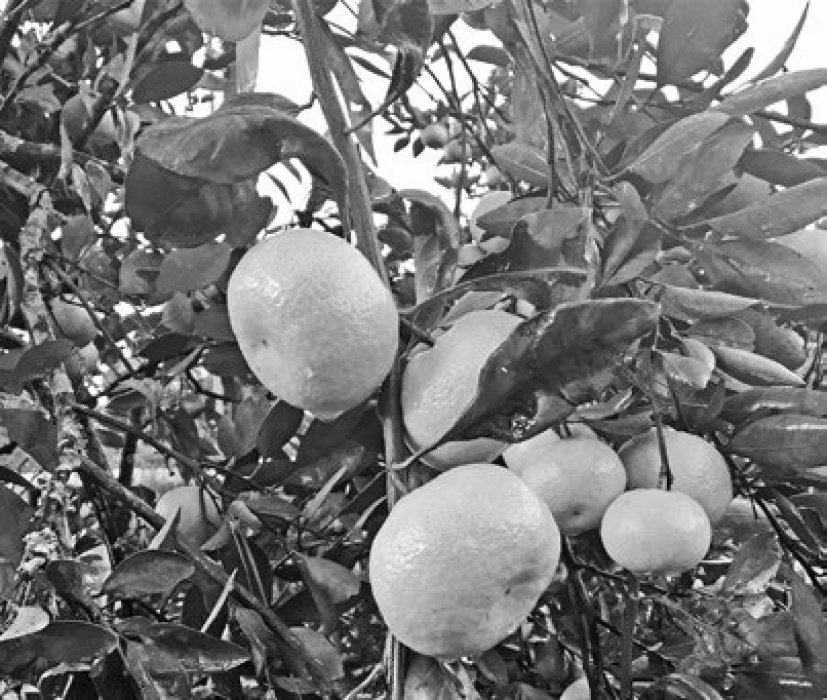
It’s satsuma time in Louisiana. Some plants began ripening in late September while other varieties will continue to mature through late November on into early December. As one of the best cold-hardy citrus types we can grow in the South, satsumas are a great option for home growers in Louisiana. And boy are they delicious!
Sadly, some of our established citrus trees are not producing well this year after last year’s Christmas freeze followed by drought this summer. But if you’re looking to start growing citrus for the first time, don’t be discouraged by this. Try growing in containers, which makes it easier to protect the trees from weather extremes.
Let’s go over some basics and history of satsumas and other types of citrus first.
Originally known as the satsuma mandarin (Citrus unshiu), we have shortened the name to satsumas. The fruit is native to China and Japan, and they are grown in cool, subtropical regions around the world. Satsumas are heavily cultivated in Japan, with production concentrated in the southern part of the country.
According to Peter Anderson at the University of Florida, the first record of satsumas in the United States was in Florida in 1876. The tree was named satsuma by the wife of General Van Valkenberg, a United States minister to Japan who sent the trees from Satsuma province on Japan’s Kyushu Island.
In the early 1900s, a million Owari satsuma trees were imported from Japan and planted throughout the southern Gulf Coast states from northern Florida to Texas. It has become the major commercial citrus type grown in the south.
Satsumas are smallt o-medium-sized, evergreen trees with low-hanging, drooping branches. The branches commonly spread with an open growth habit, and the low-lying limbs should be supported or pruned to prevent fruit from touching the ground. Leaves are dark green and glossy, and the gorgeous white blossoms are fragrant when they appear in early spring from March to April. The fruit are small and globe-shaped at a size of 3 to 4 inches. They turn from green in August to a bright orange in late September through early December, depending on the cultivar.
There are roughly 100 cultivars that vary slightly in their maturity dates, color, shape, size and quality. It is good to have satsumas that mature at different times; this allows you to harvest and eat the fruit for a longer period. Some of the most popular cultivars for Louisiana are Owari, Armstrong, Brown’s Select, Kimbrough, Louisiana Early and Early St. Ann.
Owari is the most widely grown satsuma, and it is a vigorous grower. The trees grow best in well-drained, slightly acidic to neutral, loamy soils with lots of organic matter and lots of sun. The more sun, the more flowers and fruit. Flowers have both male and female parts and will pollinate themselves to produce fruit. And they smell great!
The use of citrus and citrus flower extracts in perfumes and essential oils has a long and rich history. The scents were valued in ancient civilizations for their pleasant aroma and perceived therapeutic properties. The use of citrus and floral extracts in perfumes can be traced back to ancient Egypt and Rome. Citrus fruits such as oranges, lemons, limes and grapefruit along with their blossoms contribute unique and lively scents to fragrances. The blossoms of the bitter orange tree are used to produce neroli essential oil. This oil has a sweet, floral, citrusy scent. Neroli has been a cherished ingredient in perfumery for centuries and is known for its calming properties.
Container-grown citrus can be very productive, and because you can move containers, these trees can be protected from cold temperatures. Citrus grown on dwarfed rootstocks is a standard practice these days, making container growing an attractive option. Local retail garden centers carry many different species and varieties.